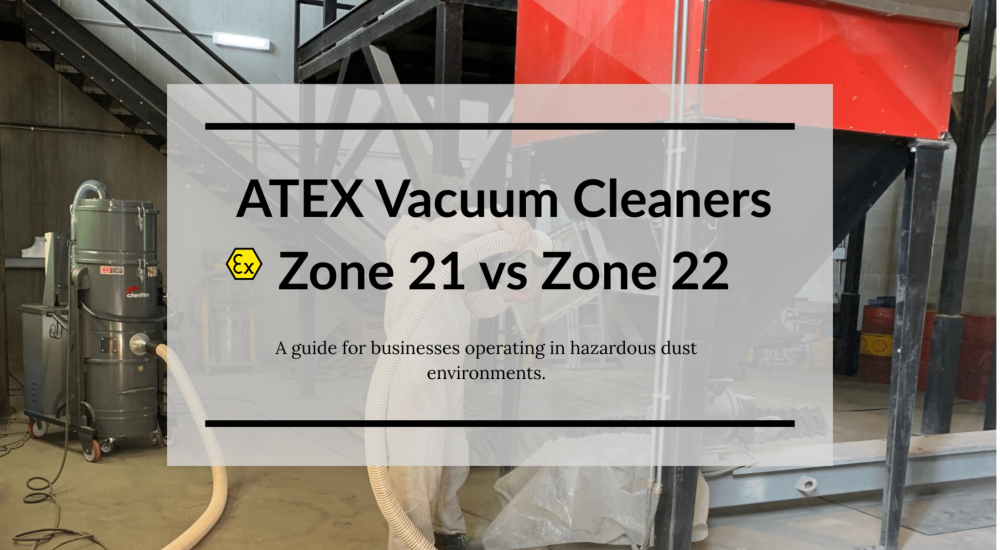

ATEX Vacuum Cleaners Explained: Zone 21 vs Zone 22 – Which Do You Need?
When working in environments where combustible dust is present, choosing the correct ATEX vacuum cleaner is critical for maintaining safety, compliance, and operational efficiency.
One of the most common questions businesses ask is: Do we need a Zone 21 or Zone 22 ATEX vacuum cleaner?
The answer isn’t always straightforward. While understanding the differences between ATEX zones is essential, the classification of your workplace must be determined through a formal DSEAR risk assessment.
In this guide, we’ll explain the difference between ATEX vacuum cleaners Zone 21 vs Zone 22, why the distinction matters, and how businesses can ensure they select equipment that matches their hazardous area classification.
________________________________________
What Are ATEX Vacuum Cleaners?
ATEX vacuum cleaners are industrial vacuum systems specifically designed and certified for use in potentially explosive atmospheres where combustible dust, gases, or vapours may be present.
Unlike standard industrial vacuum cleaners, ATEX-certified vacuums are engineered to minimise ignition risks through specialist grounding, anti-static components, certified electrical systems, and high-performance filtration.
These vacuum cleaners play a crucial role in helping businesses safely remove hazardous dust accumulations while maintaining compliance with ATEX and DSEAR regulations.
Industries that commonly require ATEX vacuum cleaners include:
- Food manufacturing
- Pharmaceutical production
- Chemical processing
- Woodworking and timber manufacturing
- Metal processing
- Additive manufacturing and 3D printing
- Recycling facilities
- Agricultural processing
________________________________________
Understanding ATEX Dust Zones
To understand the difference between ATEX vacuum cleaners Zone 21 vs Zone 22, it’s important to understand how hazardous areas are classified.
ATEX dust zones are based on the likelihood and duration of a potentially explosive dust atmosphere being present.
What Is ATEX Zone 21?
Zone 21 is an area where an explosive dust atmosphere is likely to occur occasionally during normal operation.
Examples may include:
- Powder mixing areas
- Flour handling facilities
- Bag filling stations
- Pharmaceutical production processes
- Areas around dust-generating machinery
Because combustible dust is expected to be present during normal operations, equipment used within Zone 21 environments must meet more stringent ATEX safety requirements.
What Is ATEX Zone 22?
Zone 22 is an area where an explosive dust atmosphere is not likely to occur during normal operation but could occur infrequently and only for short periods.
Examples may include:
- Storage areas
- Packaging zones
- Areas surrounding production equipment
- Locations where dust may occasionally accumulate
Although the risk level is lower than Zone 21, ATEX-certified equipment is still required to safely operate within these classified environments.
________________________________________
ATEX Vacuum Cleaners Zone 21 vs Zone 22: Key Differences
| Feature | Zone 21 Vacuum Cleaner | Zone 22 Vacuum Cleaner |
| Explosion Risk Level | Higher | Lower |
| Dust Atmosphere Presence | Occasional during normal operation | Unlikely during normal operation |
| ATEX Requirements | More stringent | Less stringent |
| Typical Applications | Powder processing, milling, mixing | Storage, packaging, peripheral areas |
| Protection Level | Enhanced ignition protection | Suitable for lower-risk dust zones |
The key consideration is ensuring that the ATEX vacuum cleaner matches the hazardous area classification established by your DSEAR assessment.
Using equipment that does not meet the area’s classification may expose businesses to significant safety, compliance, and insurance risks.
________________________________________
Who Decides Whether You Need a Zone 21 or Zone 22 ATEX Vacuum Cleaner?
This is one of the most important aspects of selecting ATEX equipment.
Industrivac UK cannot determine whether your business requires a Zone 21 or Zone 22 ATEX vacuum cleaner.
The classification of hazardous areas must be identified through a formal DSEAR (Dangerous Substances and Explosive Atmospheres Regulations) risk assessment, completed by competent personnel within your organisation or by a qualified external specialist.
Your Health & Safety team or appointed DSEAR assessor will evaluate factors such as:
- The type of combustible dust present
- The volume of dust generated
- How frequently explosive dust atmospheres may occur
- Existing control measures
- Dust accumulation levels
- Process design and operating conditions
Based on the findings, areas may be classified as Zone 21 or Zone 22.
Once this classification has been established, Industrivac UK can assist in specifying a suitable ATEX-certified industrial vacuum cleaner that aligns with the requirements identified within your assessment.
________________________________________
Why Choosing the Correct ATEX Vacuum Cleaner Matters
Selecting the correct ATEX vacuum cleaner goes beyond regulatory compliance.
Employee Safety
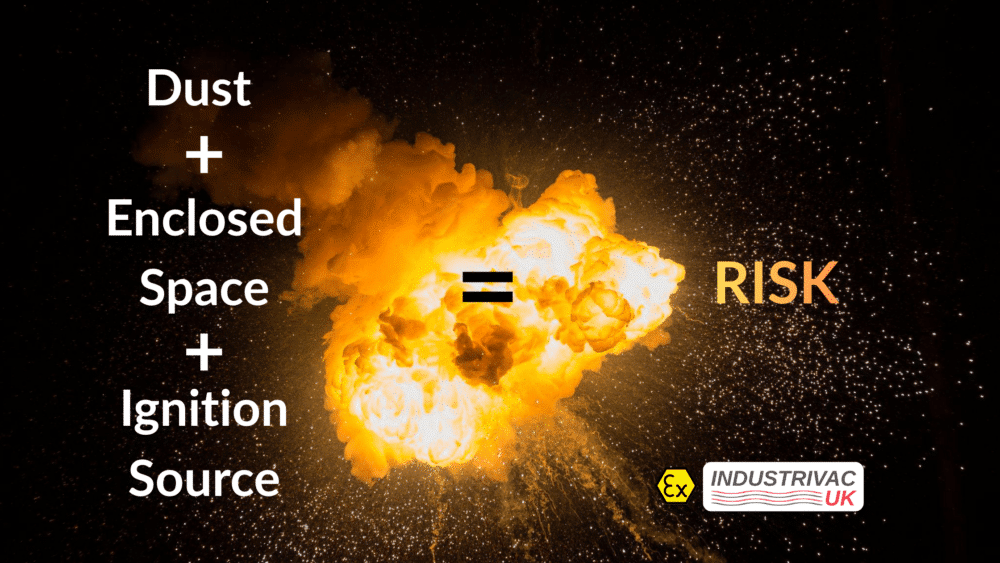
Combustible dust explosions can have devastating consequences for personnel and facilities.
The correct ATEX-certified vacuum cleaner helps reduce ignition risks and supports safer housekeeping practices within hazardous environments.
DSEAR and ATEX Compliance
Businesses operating in potentially explosive atmospheres are required to ensure equipment is suitable for the classified hazardous area.
Selecting equipment that aligns with your DSEAR assessment helps demonstrate compliance and supports safer operations.
Preventing Dust Accumulation
Dust deposits can become a significant explosion hazard when disturbed.
Regular cleaning using an appropriately certified ATEX industrial vacuum cleaner helps minimise dust build-up and reduce the risk of secondary explosions.
Protecting Equipment and Operations
Dust contamination can affect machinery performance, product quality, and maintenance requirements.
ATEX vacuum systems help businesses maintain cleaner, safer, and more productive facilities.
________________________________________
Which Industries Commonly Use ATEX Vacuum Cleaners?
Many industries generate combustible dust without fully appreciating the associated risks.
Common applications include:
- Food and beverage manufacturing
- Flour mills and bakeries
- Pharmaceutical production
- Chemical processing plants
- Woodworking facilities
- Aluminium and metal processing
- Plastics manufacturing
- Battery production
- Additive manufacturing facilities
If combustible dust is generated during your process, a DSEAR assessment should determine whether hazardous area classification applies.
________________________________________
Recommended ATEX Vacuum Cleaners from Industrivac UK
Once your hazardous area classification has been determined, selecting the correct industrial vacuum cleaner becomes much simpler.
ATEX Zone 22 Vacuum Cleaners
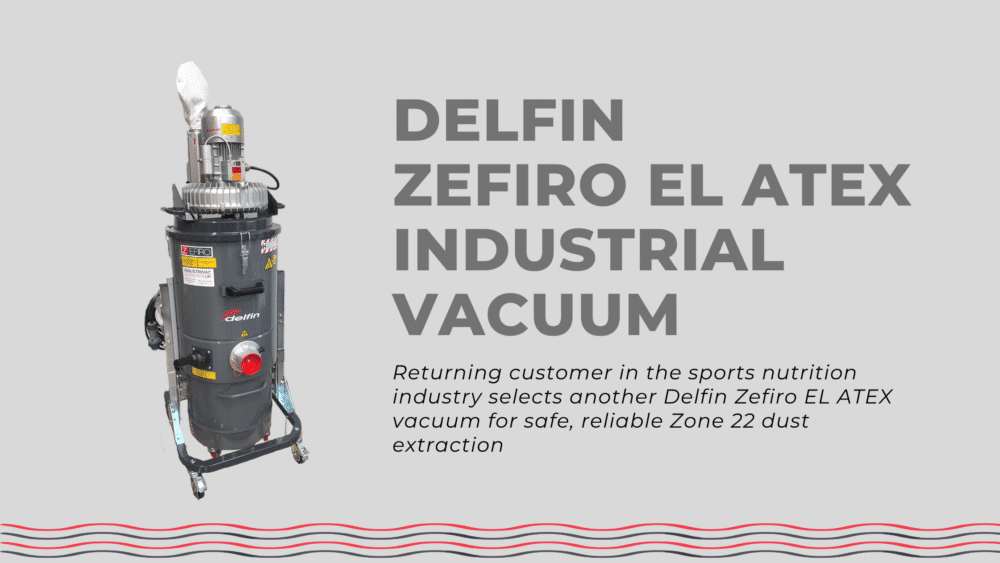
Our range of Zone 22 ATEX vacuum cleaners is designed for businesses operating within lower-risk hazardous dust environments while maintaining full compliance with ATEX requirements.
- ATEX Zone 22 Vacuum Cleaners: DM2 EL 1/3D, MTL451 1/3D, MTL201 1/3D, MTL301 1/3D
ATEX Zone 21 Vacuum Cleaners
For environments where combustible dust may occur during normal operation, our Zone 21 ATEX vacuum cleaners provide the enhanced protection required for demanding industrial applications.
- ATEX Zone 21 Vacuum Cleaners: DM2 1/2D, MTL451 1/2D, MTL201 1/2D, MTL301 1/2D
Three-Phase ATEX Industrial Vacuums
For continuous operation and larger-scale cleaning requirements, our three-phase ATEX vacuum systems deliver powerful performance within hazardous environments.
- Three-Phase ATEX Vacuum Cleaners: MTL4533 Z2/22
Air-Powered ATEX Industrial Vacuums
For hazardous environments requiring safe and reliable dust and liquid recovery, our air-powered ATEX vacuum systems deliver high-performance cleaning without the risks associated with electric motors.
- Air-Powered ATEX Zone 22 Vacuum Cleaners: 452 AIREX 1/3D, 802 WD AIREX 1/3D, DM AIREX 1/3D, MTL301 AIREX 1/3D
- Air-Powered ATEX Zone 21 Vacuum Cleaners: 452 AIREX 1/2D, 802 WD AIREX 1/2D-2/2G, DM AIREX 1/2D-2/2G
________________________________________
How to Choose Between Zone 21 and Zone 22 ATEX Vacuum Cleaners
1.Complete a DSEAR Risk Assessment
Before purchasing any ATEX vacuum cleaner, ensure a suitable DSEAR assessment has been completed by competent personnel.
This assessment will determine the hazardous area classification and identify the level of protection required.
2. Understand Your Dust Hazards
Different dust types present different explosion risks. Food powders, wood dust, metal dust, plastics, and pharmaceutical powders may all require different considerations.
3. Consider Cleaning Requirements
Think about:
- Cleaning frequency
- Dust volumes
- Continuous versus intermittent operation
- Mobility requirements
- Filtration needs
4. Choose Equipment That Matches the Classification
Once your hazardous area classification has been established, ensure any ATEX vacuum cleaner selected is appropriately certified for that environment.
5. Consult ATEX Vacuum Specialists
While hazardous area classification must come from your DSEAR assessment, specialist suppliers can help you identify the most suitable ATEX vacuum solution based on the classification provided.
________________________________________
Speak to Industrivac UK About Your ATEX Vacuum Cleaner Requirements
Understanding the difference between ATEX vacuum cleaners Zone 21 vs Zone 22 is essential for businesses operating in hazardous dust environments.
However, it is important to remember that the decision regarding whether an area is classified as Zone 21 or Zone 22 should be determined through a formal DSEAR risk assessment carried out by competent personnel.
Industrivac UK cannot classify your workplace or advise which ATEX zone applies to your operations. Instead, we work with businesses that have already identified their hazardous area classifications and require a suitable ATEX-certified industrial vacuum cleaner.
Whether you operate in food manufacturing, pharmaceuticals, chemicals, woodworking, recycling, or metal processing, our team can help you identify the right vacuum solution for your classified environment.
Contact Industrivac UK today to discuss your ATEX vacuum cleaner requirements and find the most suitable solution for your application.